

How contractors can reduce the risks of low pitch roofing
18 August 2026For contractors delivering new-build and refurbishment projects, the roof is often the part of a structure that demands the closest scrutiny. It is also the component most likely to cause long-term liabilities if it under-performs. A roof must do far more than keep the weather out, it protects the fabric of the building beneath, influences thermal efficiency and condensation control, and has a major bearing on maintenance and insurance costs.

Waterproofing challenges
Here, Greg Hissey, Technical Sales Manager at Onduline Building Products, discusses why contractors responsible for delivering low-pitch roofs or inheriting them during refurbishment and remedial works, need confidence that a roof will continue to perform for decades, not just at practical completion.
Low-pitched tiled roofs are one of the most frequent problem areas contractors encounter on site. These designs are increasingly common in both new-build and refurbishment projects because they help to satisfy planning height restrictions, deliver more usable internal space and often complement existing building profiles. Yet a shallow pitch places greater demands on the roof covering. Water drains more slowly, tiles are exposed for longer to driven rain, and even small detailing errors can lead to severe leaks. Repeated patch repairs rarely address the underlying problem, leaving contractors managing ongoing defects, rework and potential disputes.
BS 5534
Standards such as BS 5534 and guidance from warranty providers including NHBC make it clear that tiles and slates should not be relied on as the sole waterproofing barrier below their recommended minimum pitch. Nevertheless, contractors still encounter projects where these limits have been ignored, or where underlay membranes have been used in situations for which they were never intended. The results are inevitable: premature underlay deterioration, structural timber decay from moisture ingress, and extensive internal damage.
Where conventional tiles fall short
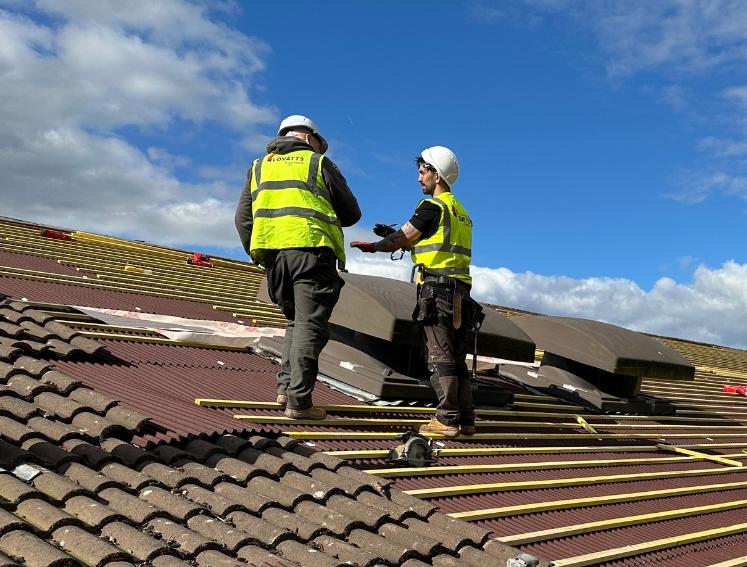
Contractors faced with onsite issues
The challenge for contractors is to deliver a remedial approach that is technically robust, cost-justifiable and minimally disruptive. Simply stripping and re-tiling with a specialist low-pitch tile may not be enough if the underlying design remains vulnerable to water ingress, and it can be expensive and visually intrusive, especially on heritage or housing-association stock where continuity of appearance is important.
The issues are compounded by how slow-draining low-pitch roofs behave under heavy rainfall and driven winds. Even minor detailing faults, misaligned tiles, compromised flashings or inadequate overlaps, can allow water ingress. Once moisture reaches the underlay or timber structure, contractors may find themselves dealing with recurring repairs, increased snagging and reputational risk.
How sub-roof systems transform performance
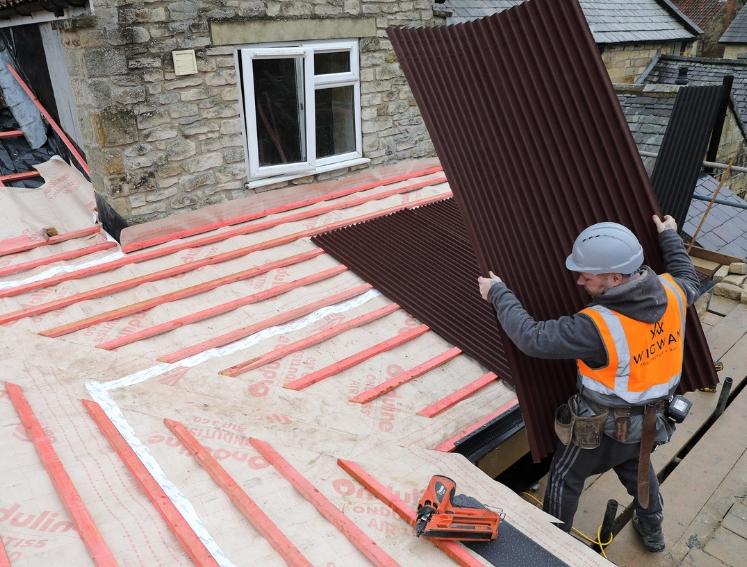
This is where the growing use of sub-roof systems has transformed the options available to contractors and project teams. By adding a dedicated waterproofing layer beneath the tile or slate covering, a sub-roof system takes on the role of primary defence against the elements, while the external covering functions largely as a weathering and aesthetic layer. This approach mitigates the risks that have traditionally made low-pitch tiled roofs a weak point in the building envelope.
A practical demonstration of this was seen during the refurbishment of a large Aldi supermarket in Cardiff. The existing tiled roof sat on a shallow pitch that had been prone to persistent water ingress. Re-roofing needed to be completed while the store remained operational, with no tolerance for further disruption. By incorporating Onduline’s ISOLINE® LOW LINE corrugated sub-roof beneath the new tiles, the project team created a watertight barrier early in the programme. For the contractor, this meant the building was protected sooner, enabling work to continue in challenging weather conditions, including heavy rainfall and even localised flooding, without any interior water damage or interruption to trading.
The case highlighted the value to contractors and their clients of specifying a system that provides reliable protection at low pitch, even before the outer covering is in place. For many clients, sustainability is also a key factor, and ISOLINE® LOW LINE contributes here too by being manufactured from 47% recycled cellulose fibres.

Corrugated bituminous systems
Corrugated bituminous systems have proved particularly suited to the demands of the British climate. Their shape promotes active drainage to the eaves and ensures airflow above and below the sheet, which reduces condensation risk and helps protect timber structures. From an installation perspective, they are also more forgiving of minor imperfections in tile installation than membrane-only solutions, which depend on a perfect seal at every joint.
For contractors working on social-housing stock, end-of-warranty projects or refurbishment schemes, this has several important implications. It allows the continued use of existing or reclaimed tiles to maintain appearance and reduce waste, while delivering a step-change in performance. It also supports planned-preventive-maintenance strategies by reducing the likelihood of reactive leak repairs and by extending the life of the roof structure itself. In situations where remedial works are required, a sub-roof system can often be introduced as part of a re-roofing programme without extensive structural alteration.
Building long-term confidence for contractors and clients
Long‑term asset performance increasingly relies on evidence‑based decisions made during construction and refurbishment. Contractors are under growing pressure to demonstrate that their specifications and installation methods align with recognised standards and warranty requirements. A sub‑roof system with third‑party certification and a demonstrable track record helps provide this assurance, turning what can be an ambiguous and high‑risk element of the building envelope into a known quantity.
The ability to install a technically defensible and standards‑compliant solution is particularly valuable where low‑pitch defects arise soon after completion. Rather than resorting to repeated site visits or complex discussions around liability, contractors can deliver a single intervention that restores long‑term performance and protects the programme.
Contractors roles
Low‑pitched roofs will continue to feature prominently across modern construction, refurbishment and retrofit because they answer practical planning and design requirements. But their durability will always be scrutinised. Contractors play a pivotal role in ensuring that specification and detailing on site are equal to the challenge. By recognising the limitations of tiles alone at shallow pitch and adopting proven sub‑roof technologies, contractors can help protect both the building fabric and their client’s investment.
A contractor’s remit is increasingly to look beyond immediate installation and consider lifecycle performance, warranty risk and future maintenance. With robust sub‑roof solutions now available and well documented, there is no need to accept low‑pitch failures as inevitable. Instead, contractors can help guide clients towards roofing strategies that reduce defects, support compliance and extend asset life – outcomes that benefit all stakeholders in the built environment.
Become a trained installer
Become a certified expert in the installation of the ISOLINE LOW LINE sub-roof system and take your roofing business to the next level.
Onduline's Approved Installer Programme is a collaboration between Onduline and professional roofing contractors, designed to ensure that our ISOLINE LOW LINE system is installed to the highest standards
