

Achieving a low-pitch extension in a sensitive heritage setting
05 February 2026Working within a conservation area brings added layers of complexity to any building project, particularly where new interventions must sit comfortably alongside historic fabric. This was the challenge faced by Wigwam Architecture and Build when undertaking a small rear extension to a period property in the historic market town of Helmsley, North Yorkshire.
The property sits directly behind the ruins of Helmsley Castle and within a tightly controlled conservation setting, meaning any alterations needed to respect the established architectural character of the area. Planning approval for the extension was granted on the basis that the new roof would remain visually in keeping with the existing building and surrounding areas, including the continued use of traditional clay pantiles.
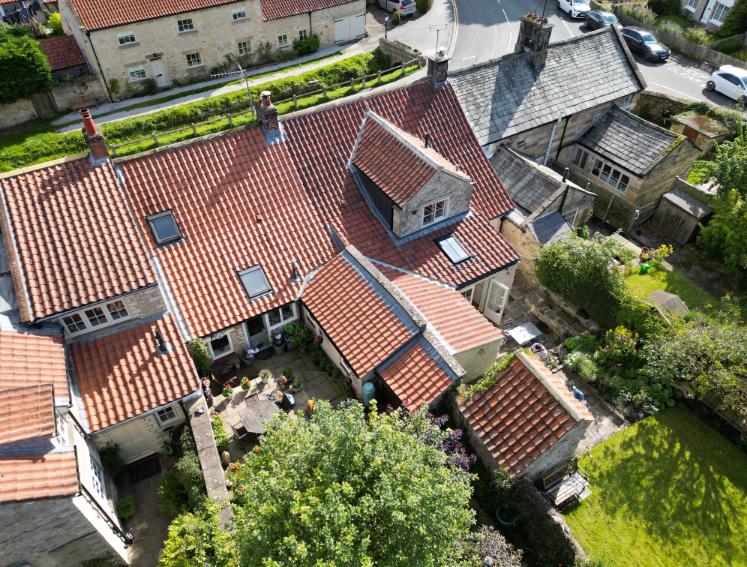
Designing an extension that respects its surroundings
While the aesthetic requirement was clear, the roof design itself introduced a technical challenge. Owing to the constraints of the site, the rear extension required a roof pitch significantly lower than the minimum typically recommended for reclaimed clay pantiles. In this case, the new roof was designed at a pitch of just 12 degrees, well below the 25 degrees usually required for reclaimed tiles to provide effective weather protection on their own.
As a result, Wigwam needed to identify a way of retaining the traditional appearance demanded by planning, while ensuring the roof could still perform reliably in a low-pitch application.
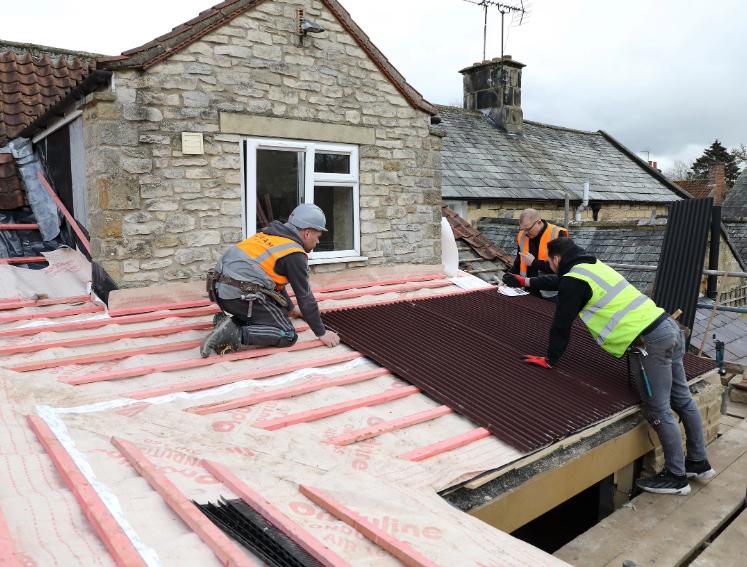
When traditional materials meet modern design challenges
Stuart Simpson, Senior Project Manager at Wigwam Architecture and Build, explains: “As the roof of the extension was at such a shallow pitch compared to the rest of the house, we had to find a solution that would enable us to use reclaimed pantiles without compromising the build. Flat roofing wasn’t appropriate from either an aesthetic or cost perspective, so we needed an alternative approach that would still satisfy both performance and visual requirements.”
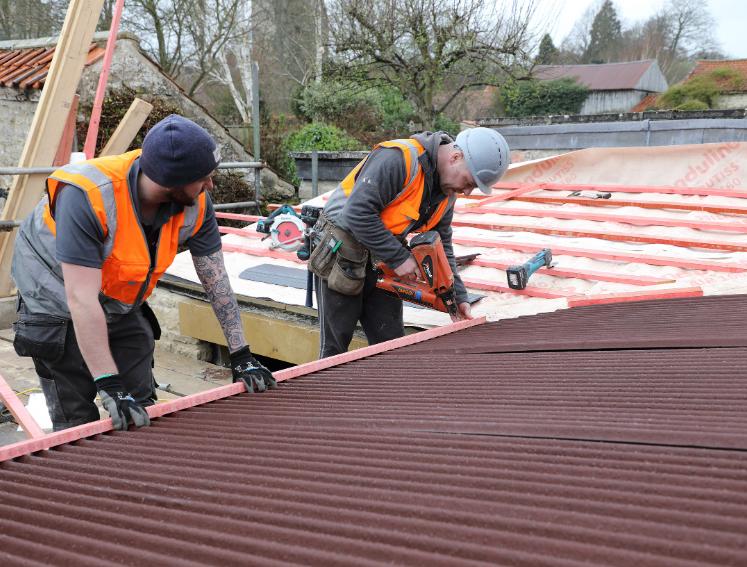
A hidden solution beneath a traditional roof
The solution was to introduce a dedicated sub-roof system beneath the reclaimed pantiles, allowing the tiles to act as a visual finish while the sub-roof provided the primary waterproofing layer. This approach enabled the extension roof to closely match the character of the existing property, while still achieving the required weather resistance at a reduced pitch.
For this project, Wigwam specified Onduline’s ISOLINE® LOW LINE sub-roof system, which is designed specifically for low-pitch applications and installed below the main roof covering. The system allowed the reclaimed pantiles to be retained as part of the design, ensuring the extension roof blended seamlessly with the original building and its surroundings.
“It was the first time we’d used this type of system,” Stuart continues. “There was a lot going on in quite a small area, so it was important that the solution was straightforward to install and didn’t over-complicate the build. Once in place, it provided confidence that the roof would perform as intended while keeping the appearance exactly as required.”
By acting as the primary waterproofing layer, the sub-roof enabled the pantiles to be used at a much lower pitch than would otherwise be possible, without altering the external character of the roof. This proved particularly valuable in a conservation context, where modern alternatives could have undermined the visual integrity of the extension.
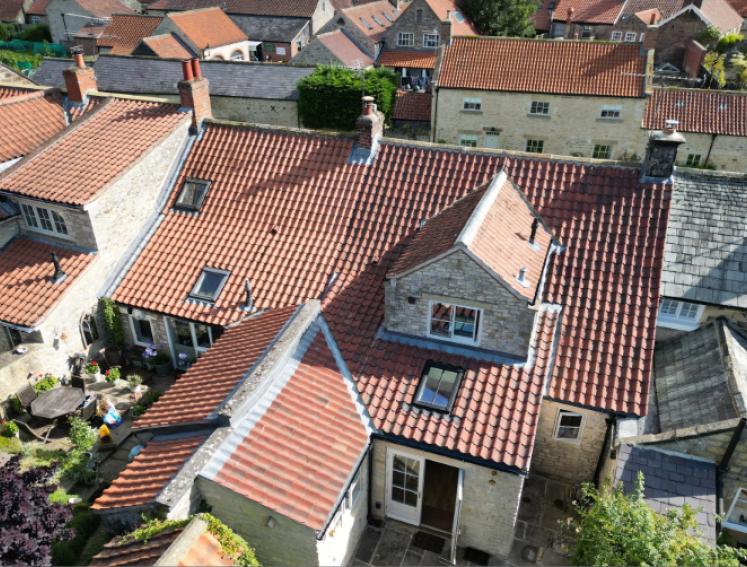
A successful blend of old and new
Now completed, the extension sits discreetly behind the historic property, with the roof finish appearing consistent with the surrounding built environment. According to Wigwam, the approach demonstrates how sensitive detailing and appropriate material selection can allow modern construction requirements to be met without compromising heritage aesthetics.
“It’s working exactly as we’d hoped,” says Stuart. “For projects where maintaining the character of a building is critical, but design constraints limit roof pitch, this kind of solution offers a practical way forward.”
The Helmsley project highlights the importance of balancing performance and preservation in heritage settings, showing how traditional materials can still be successfully incorporated into contemporary extensions when supported by carefully considered construction methods.
If you are planning a house extension, speak to your roofing contractor about ISOLINE® LOW LINE.